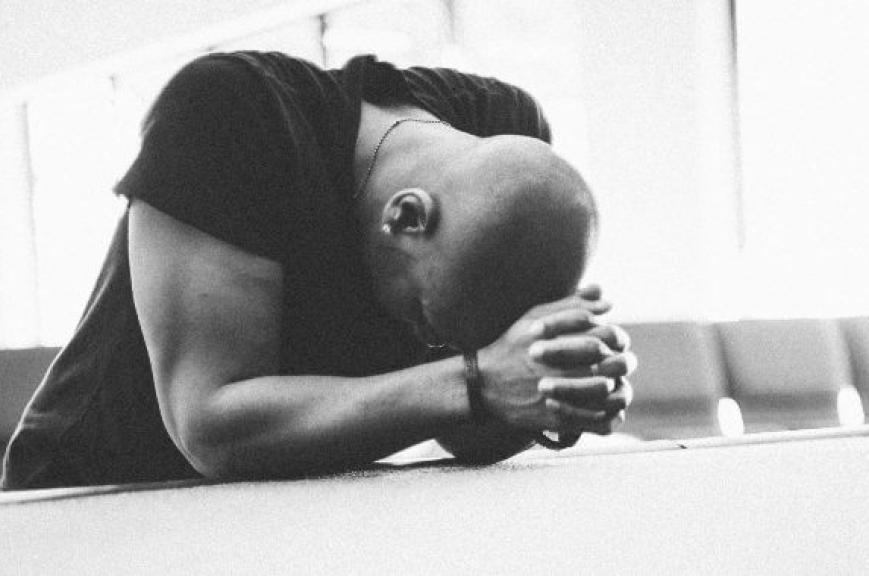
Prayer is simply having a conversation with God. So why would Jesus’ followers ask Jesus to teach them how to pray? Similarly, why would Jesus view prayer as something he needed to teach his followers to do?
The answer is that in Jesus’ mind, his followers should build a pattern for a regular conversation with God. Not only that, but there are six component parts to build into that conversation that are so important that he mentioned the identical six components of prayer twice in Scripture. Matthew records Jesus teaching these six in the Sermon on the Mount. Luke reveals Jesus teaching these six a second time in the Sermon on the Plain. This episode completes our study of these important six components of the prayer pattern that Jesus highlighted for us to follow.
In Luke 11 we read: Jesus was praying in a certain place, and when he finished, one of his disciples said to him, “Lord, teach us to pray, as John taught his disciples.” And he said to them, “When you pray, say: “Father, hallowed be your name. Your kingdom come. Give us each day our daily bread, and forgive us our sins, for we ourselves forgive everyone who is indebted to us. And lead us not into temptation.”
Notice that in Luke 11:2-4 Jesus teaches a simpler version of the same six principles of prayer he had taught in Matt 6:9ff, which we know as The Lord’s Prayer. Notice also that he gave them in the same order. The difference is that in Matthew, Jesus gives an explanation of three of the principles. He explains, may your kingdom come, (Matt 6:10a & Luke 11:2) when he continues may your will be done on earth as it is in heaven (Matt 6:10b). He explains lead us not into temptation (Matt 6:13a, Luke 11:4) when he continues, but deliver us from evil (Matt 6:13b). Jesus amplifies forgive us our debts as we have forgiven our debtors (Matt 6:12 & Luke 11:4) two verses later in Matthew 6:14-15, when he says, For if you forgive others their trespasses, your heavenly Father will also forgive you, but if you do not forgive others their trespasses, neither will your Father forgive your trespasses. But they are the same six principles given in the same order.
Last week we saw how radically different prayer for Christ-followers is from the religious repetition of holy sayings often regimented for certain prayer times in other world religions. These times in Judaism were 9 AM, 12 PM, and 3 PM. The two rote Jewish prayers to be recited were the Shema, Deut 6:4-9, and the Shemoneh ‘esreh, which means eighteen, because it consisted of 18 rote prayers to be recited. Jesus’ teaching about prayer was entirely different; it was not formal, structured, external, regimented words spoken to God as ritual, but an intimate, heart-driven conversation originating from a living, dynamic relationship with The Father. Nevertheless, Jesus does want us to have intentional conversations with God that are shaped to include six constituent parts. Let’s examine Jesus’ teaching of these six components in Luke 11, beginning with a review of the first three, which we examined last week.
1. Father. (Luke 11:4a). Here we see our adoption into God’s family, giving a radical relational foundation for prayer—a beloved child speaking to his loving father. His help, and spiritual power don’t have to be pried out of his tight-fisted hands. Through Christ we are God’s adopted children and, as it happens, our particular father LOVES TO GIVE GOOD GIFTS TO HIS CHILDREN, especially spiritual power through the Holy Spirit. Later in Luke 11 we read, What father among you, if his son asks for a fish, will instead of a fish give him a serpent; or if he asks for an egg, will give him a scorpion? If you then, who are evil, know how to give good gifts to your children, how much more will the heavenly Father give the Holy Spirit to those who ask him (Lk 11:11-13)! Jesus had used nearly identical words in his Sermon on the Mount (Matt 7:9-11), but in the Luke account, Jesus substitutes Holy Spirit for good gifts. Both are true. God loves to give good gifts to his children. But the best gift is the power of the Holy Spirit at work in our lives. In linking God’s desire to give his children good gifts to his pouring out the Holy Spirit whose job is to help his followers overcome evil and spread the kingdom of righteousness, Jesus reveals that he sees prayer as a weapon in the battle for the kingdom of righteousness to prevail in our hearts and over the earth.
2. Hallowed by your name. (Luke 11:4b). Here Jesus gives the motivation for prayer. Jesus modeled this aspect of praying in John 17, When Jesus had spoken these words, he lifted up his eyes to heaven, and said, Father, the hour has come; glorify your Son THAT THE SON MAY GLORIFY YOU.” A few verses later, Jesus reveals that this desire for The Father to be glorified was the focus of his life, I glorified you on earth, having accomplished the work that you gave me to do. (Jn 17:4). At the heart of the request, “May your name be hallowed” is “a burning desire that the whole world may bow before God in adoration, in reverence, in praise, in worship, in honor, and in thanksgiving” (Lloyd-Jones, Studies in The Sermon on the Mount). The more our prayers are rooted in our desire to see the name and reputation of God honored, the more power they possess.
3. Your kingdom come (Luke 11:4c). The third prayer principle identifies the purpose of prayer, which very often is neglected in our prayers. It is advancing Christ’s kingdom. Praying “May your kingdom come (i.e. may your will be done on earth as it is in heaven)” is the primary purpose of PRAYER because it is the primary purpose of Christians’ LIVES. We are to seek first the kingdom of God and his righteousness in human hearts and in the culture all over the earth, every square inch of which, King Jesus claims as his own.
In the book of Acts, Peter and John were arrested, warned not to proclaim the gospel, and released. In response, the church gathered to fight for the advance of the kingdom through prayer. In this prayer, they quoted Psalm 2. The opening verses of Psalm 2 speak of the cosmic rebellion against Yahweh, Why did the Gentiles rage, and the peoples plot in vain? The kings of the earth set themselves, and the rulers were gathered together, AGAINST THE LORD AND AGAINST HIS ANOINTED. Psalm 2 continues, telling us that Yahweh laughs at their supposed power. Why? Because his answer to the rebellion of the kingdom of darkness is to send Christ, the Anointed One, to recover Adam’s lost kingdom. Palm 2:6 records God saying, As for me, I have set my King on Zion, my holy hill. (vs 6) Psalm 2 then describes the words of Yahweh to His Son recorded from the point of view of Jesus. The Lord (Yahweh) said to me (Christ), “You are my Son; today I have begotten you. Ask of me, and I will make the nations your heritage, and the ends of the earth your possession (vs 7b-8).
Notice the process to which Yahweh points for the spread of Christ’s kingdom. ASK OF ME and I will make the nations your heritage. What is Jesus doing right now? Scripture tells us, he is ASKING. He is at the right hand of the father interceding. What is he asking for? His church to be empowered to make disciples of the nations. All authority has been given to me, said Jesus. Go therefore and make disciples of all nations (Matt 28-18-19).
Starting with our own sinful hearts being transformed, Christ’s kingdom of righteousness expands out into the world from nation to nation through the ASKING of the Son. Whatever his reason, God has ordained that the powers of darkness must be dislodged from the spiritual ground they hold by ASKING, i.e. by PRAYER made in Jesus’ name. In Matt 6:33, part of the same sermon that contains the Lord’s Prayer, Jesus teaches Christians that their main responsibility is to seek first the reign of Jesus righteousness over every aspect of their lives. That means loving Jesus more, praising his perfections more fully as we grow to know who he really is, growing in Christ-like character and in the way I love my wife, kids and neighbors. But here is the point: The only way this advance of kingdom righteousness will succeed is by first loosening Satan’s hold on that domain through prevailing prayer. So, Jesus teaches us that a major part of daily prayer is praying, May your kingdom come. May your righteous agenda prevail in my heart attitudes and in shaping every sphere of life where I have influence.
4. Give us each day our daily bread (Luke 11:5a). We’ve seen the environment of prayer, the motive of prayer, the purpose of prayer. Now we see the dependency of prayer. What a marvelous thought—that the god who created the entire universe, who is the god of all space, time, and eternity, who is infinitely holy and totally self-sufficient, should care about supplying our daily bread. This petition is an invitation to bring every need—physical, mental, emotional, relational, and spiritual to him. Whatever I need TODAY to get me through, is my request to God, my Father, who is also named, Jehovah Jireh, which means “The Lord will Provide.” Jesus knew our human propensity to worry and he gives us his prescription for it. Name the things you are worried about. Specifically ask me to provide whatever you need, and you will know the joy of seeing me provide. Paul writes, Don’t worry over anything whatever; TELL GOD EVERY DETAIL OF YOUR NEEDS in earnest and thankful prayer, and the peace of God which transcends human understanding, will keep constant guard over your hearts and minds as they rest in Christ Jesus. (Phil 4:6-7).
Many of us have special memories of God meeting specific prayer requests. One of mine goes back to a time when our ministry sent out our year-end letter to our financial partners for year-end giving, facing a daunting challenge. We normally raise about 30% of our budget through yearend giving. Because Covid 19 hurt our donors and stripped away my speaking opportunities, we brought a $15,000 deficit into December causing our year-end target to be over $29,000. What was worse, those we could have counted on to give large year-end gifts were not in a position to give anything. But on December 31, I opened the mail to a notice that a friend of our ministry had donated $15,000 of stock. Others had stepped in with the other half, and we raised the full amount. God loves to supply our needs. I think I understand that a little bit because as a father, nothing pleases me more than providing what my children need to flourish.
5. And forgive us our sins, for we ourselves forgive everyone who is indebted to us (Luke 11:5b) The fifth prayer principle is to deal honestly with sin—ours and our response to others who have harmed us. This principle focusses on the honesty of prayer. Jesus identifies the two most foundational blinders to our spiritual vision—a guilty conscience and an unforgiving spirit. Jesus had already taught that kingdom members are those pursuing a pure heart. Blessed are the pure in heart for they shall see God. Unconfessed sin blinds our spiritual vision. It is vital to confess our sins against God regularly to him because we cannot walk with God, who is Light, and continue to walk in darkness. I am amazed at engaged couples and divorcees in new romantic partnerships who claim to be Christ followers but engage in unrepentant, regular, unmarried sex. I’m not talking about fighting to stay pure and messing up, but habitual unmarried sex. We need to confess our sins to God to maintain open fellowship with him. Fornication is not the unpardonable sin, but such couples need to hear John’s warning:
If we say we have fellowship with him while we walk in darkness, we lie and do not practice the truth. But if we walk in the light, as he is in the light, we have fellowship with one another, and the blood of Jesus his Son cleanses us from all sin. If we say we have no sin, we deceive ourselves, and the truth is not in us (1 John 1:6-8).
Similarly, we cannot walk closely with Jesus and harbor an unforgiving heart against one who hurt us or a loved one. Purity of heart requires recognizing the truth that we have sinned far more against a holy God than anyone has sinned against us and those so forgiven cannot require perfection from another. Jesus, knowing that both guilt and bitterness destroy relationships teaches us as a regular part of prayer to confess our sins and search our hearts to be sure we have forgiven others.
6. And lead us not into temptation (Luke 11:5c). The final prayer principle given by Jesus is alertness to temptation. This principle teaches us that anticipating potential temptation is part of daily prayer. I must admit that the expression, “Lead me not into temptation” puzzled me for years. Why would I have to ask God not to lead me into temptation. He is holy. James says, Let no one say when he is tempted, “I am being tempted by God,” for God cannot be tempted with evil, and he himself tempts no one. Yet, there must be something very important here, to be included as the sixth prayer principle.
I believe the key to understanding this sixth prayer category comes in Jesus’ similar admonition to Peter, James, and John in the Garden of Gethsemane, Pray that you may not enter into temptation (Luke 22:40, 46). Remember that Jesus spoke Aramaic. The Aramaic word for “pray” that Jesus used in the Garden of Gethsemane must have had the connotation of watchful prayer because when Matthew (26:41) and Mark (14:38) translate Jesus’ Aramaic word for “pray” into Greek, they both used two words, watch (GREGOREO) and pray (PROSEUCHOMAI) to convey the meaning of the Aramaic word. But Luke translated the same Aramaic word simply, pray. So, when Jesus teaches us to pray “lead us not into temptation” he is saying to be prayerfully watchful about the temptations we might face each day. This admonition is repeated by Peter who commands, Be sober-minded; be watchful. Your adversary the devil prowls around like a roaring lion, seeking someone to devour (1 Pet 5:8). I believe that in the Lord’s Prayer, a pattern for daily prayer is given for us to follow. Jesus is saying, Think about the day ahead. Where might you be tempted? Where might God’s providence lead you that you might be tempted and prepare ahead of time to be alert and resist. Jesus was very concerned that we do this. Could it be that many Christian men are losing spiritual battles because we don’t realize that this is how Jesus taught us to pray—to start the day with a few seconds of thought about where the temptation to sin might strike?
This final prayer petition again links prayer to our calling to cosmic warfare. It is the third time Jesus did so, in the space of just six components to the pattern.
- In explaining the first principle, Jesus tells us that as our father God loves to us the good gift of the Holy Spirit’s help in the battling the kingdom of evil.
- In the third principle, Jesus directly teaches us to pray for the spread of his kingdom of righteousness to spread overthrowing the kingdom of darkness.
- In the sixth principle, Jesus tells us to anticipate the attacks of the kingdom of darkness.
PRAYER OFTEN FEELS FUTILE
Prayer is a human activity that often feels more futile than almost any other human endeavor we pursue. There is a good reason for this struggle. In nearly all spheres of life, we see our efforts pay off. We study hard and pass the exam. We concentrate on understanding our wife's feelings and we can tell she feels understood. We do our job and get a paycheck. We usually get to see that we are reaping what we are sowing. Prayer, however, takes us into a unique, unseen world. Because God's actions to answer many of our prayers, especially for Kingdom advancement, take place in a hidden, spiritual world, which includes the human heart, into which we do not see, it is very hard to stay motivated to pray. We don’t see what God is doing to answer our prayers. We pray and pray, but prayer answers usually require God to act in ways that are unseen steps in that direction. It is not that our prayers don’t have an impact; it’s that we can’t see the impact. And we must keep praying for God to keep taking the steps needed to answer. Prayer guru, Wesley Duwel, calls this process of continuing to ask prevailing. In his book, Mighty Prevailing Prayer, he gives us a glimpse of what might be happening that we don’t see, over which we must prevail.
WE MUST PREVAIL OVER SITUATIONS. The situations about which you pray are often very complex. There may be so many interrelated aspects that it is almost impossible to discover what is hindering or blocking the way. Organizational structures, government laws, traditions, or habits of thinking and long-established methods may be so involved and intricately intertwined that prayer answers seem impossible to bring about changes. In some aspects of situations, the actions of a number of people must be coordinated and timed in such detail that there always seems to be something hindering. It may take a whole series of prayer answers before an exceedingly complex situation yields to the will of God (for which you are praying)….
WE MUST PREVAIL OVER PEOPLE. “What will it take.” you ask, “to change some person's attitude or decision?” The only hope is for God to change what you cannot change without his help. Therefore, you pray. God has a way to speak to a person's conscience, to his or her common sense, and better judgment. God has a way to bring new suggestions to a person's mind until the one sees reasons for and advantages of a changed course of action. It may take a series of circumstances to bring new light on this situation or pressure on the person. But all such changes are possible for our sovereign God.
WE MUST PREVAIL OVER SATAN. The instigating, manipulating, coordinating mastermind behind much over which you must prevail is Satan. He works through his many demons to do all in his power to keep you from prayer, to shorten your prayer time, to distract you while you pray, and if at all possible, to get you to give up before you prevail in prayer. Satan would rather have you do anything but pray. He would rather have you busy working for God than praying to God. More than anything else you can ever do, prevailing prayer has the potential to hinder Satan, to damage his kingdom, and rob him of his human followers and slaves.
Effective prayer requires exceptional endurance because we do not see all that God is doing enroute to answering our prayers. But we must keep asking. Listen to the voice of Jesus urging us “KEEP ON PRAYING BECAUSE GOD IS ACTING” in Luke 11:5-10.
“Which of you who has a friend will go to him at midnight and say to him, ‘Friend, lend me three loaves, for a friend of mine has arrived on a journey, and I have nothing to set before him’; and he will answer from within, ‘Do not bother me; the door is now shut, and my children are with me in bed. I cannot get up and give you anything’? I tell you, though he will not get up and give him anything because he is his friend, yet because of his impudence he will rise and give him whatever he needs. And I tell you, ask, and it will be given to you; seek, and you will find; knock, and it will be opened to you. For everyone who asks receives, and the one who seeks finds, and to the one who knocks it will be opened.”
For Further Prayerful Thought.
- What is your response to the idea that prayer is an intimate, real conversation with a heavenly father who loves us, but that Jesus directed his followers to build that conversation around six principles?
- Why do you think Jesus taught us to regularly confess our sins to God and to associate that with insuring that I have a forgiving attitude towards others?
- With all the challenges that we have to face in everyday life to try to live for Jesus, why do you think Jesus included, as the last petition that we should anticipate temptation and ask for help to resist it when it comes? Why don’t we do that more often?
- You would you reconcile your unanswered prayers with Jesus’ promise, For everyone who asks receives, and the one who seeks finds, and to the one who knocks it will be opened. What message is Jesus trying to send?


